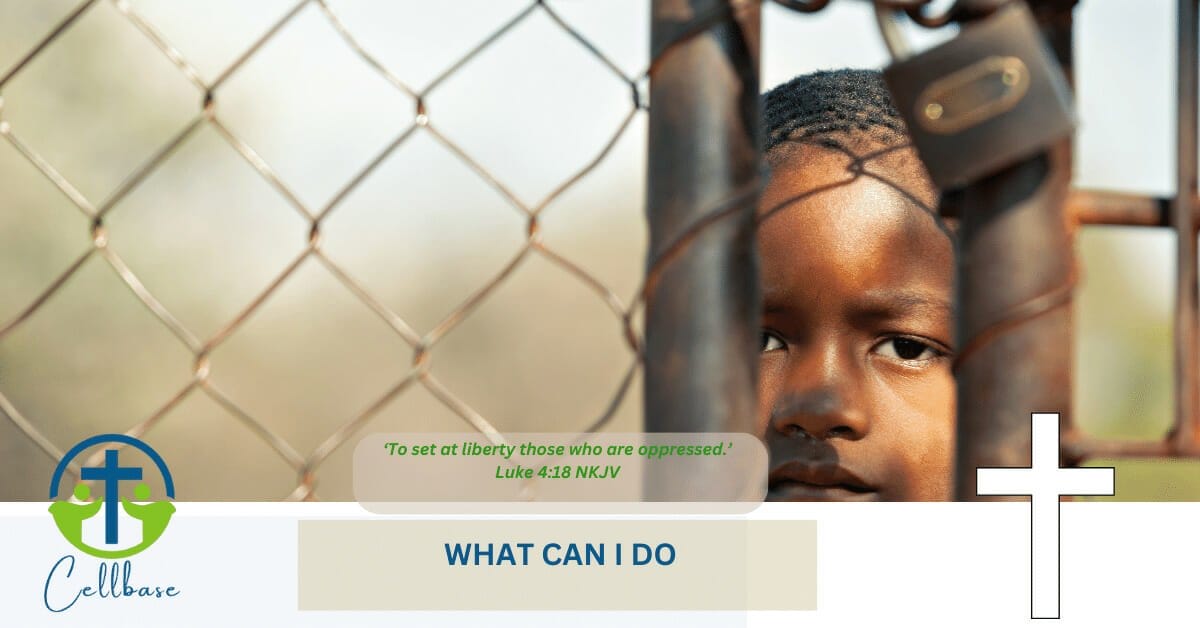
‘To set at liberty those who are oppressed.’ Luke 4:18 NKJV
UNICEF estimates that as many as 2 million children and young people are exploited in the worldwide sex trade every year – that’s four every minute. Can you imagine what the governments of the world would do if a city of two million people was taken captive and exploited and abused every day? If you think that’s bad, here is a statistic that should break your heart and bring you to your knees: only 1 per cent of those who are abducted into the sex trade are being rescued from it! You say, ‘What about the other 99 per cent?’ When they get too old to have value to their pimps, or too sick to work, or become pregnant, or diseased, they’re thrown away like rubbish. These are the ‘walking wounded’ who carry emotional and mental scars and struggle with the effects for the rest of their lives.
Perhaps you’re thinking, ‘It’s sad, and it’s shocking, but thank God it’s not my children or grandchildren.’ Thank God, indeed! But as a redeemed child of God, you have a responsibility to care about it. Jesus said He came to ‘heal the broken-hearted, to proclaim liberty to the captives…to set at liberty those who are oppressed’ (v. 18 NKJV). That means instead of avoiding the problem, you must become aware, alarmed, and activated. Only when enough people speak up do politicians start to act. So speak up! Start praying about it. Support ministries that are involved in it. That way, you will be able to stand before God one day and say, ‘Lord, I did what I could about it!
The exploitation of children in the worldwide sex trade is a deeply troubling and urgent issue that demands our attention and action. The statistics provided by UNICEF, estimating that 2 million children and young people are exploited in the sex trade every year, are indeed alarming. If we consider the magnitude of this problem, where four children are victimized every minute, it becomes imperative for governments, communities, and individuals to come together and take concrete steps to support and protect these vulnerable children.
Firstly, governments need to prioritize the protection of children and allocate adequate resources to combat child exploitation. They should strengthen legislation and law enforcement efforts to ensure that those involved in child trafficking and sexual exploitation are brought to justice. Specialized units within law enforcement agencies should be established to investigate and dismantle networks involved in child trafficking and sexual exploitation.
Furthermore, governments should focus on prevention by investing in education and awareness campaigns. Children need to be educated about their rights, personal safety, and the dangers of exploitation from an early age. Communities must be engaged in creating safe environments for children, fostering a culture of protection and support.
International collaboration is essential in addressing this global issue. Governments must work together to strengthen border controls and improve information sharing to prevent the movement of traffickers and victims across countries. This cooperation should also extend to sharing best practices and supporting each other in developing effective strategies to combat child exploitation.
Civil society organizations, including NGOs and grassroots initiatives, play a crucial role in supporting and rehabilitating exploited children. These organizations provide shelter, healthcare, counseling, and vocational training to survivors, enabling them to rebuild their lives. Supporting and partnering with such organizations through donations, volunteering, and raising awareness can make a significant difference in the lives of these children.
As individuals, we can contribute by being vigilant and reporting any suspicious activities or cases of child exploitation to the appropriate authorities. We can support organizations working to combat child trafficking through financial contributions or volunteering our time and skills. Engaging in conversations about this issue with our friends, family, and community members can also help raise awareness and foster a collective commitment to protecting children.
In conclusion, the exploitation of children in the worldwide sex trade demands immediate action from governments, communities, and individuals alike. By prioritizing the protection of children, strengthening legislation, investing in prevention and education, fostering international collaboration, and supporting organizations working directly with victims, we can make a meaningful impact in ending this abhorrent practice. It is our collective responsibility to ensure that no child falls victim to such exploitation and that they are provided with the support and opportunities they need to thrive.